
GMOs 7nm Chips Will Be a Game Changer for Bitcoin Mining

This past week the Japanese internet firm, GMO Group announced the company is planning to join the bitcoin mining industry. One notable piece of information in the company’s statements revealed the new mining operation would utilize, “cutting-edge 7nm process technology for chips to be used in the mining process.” GMO Group further details they have an “alliance partner” with a semiconductor design company.
At the moment, 7nm semiconductor chips are not produced commercially, but many firms have announced they are planning on producing these chips in the very near future. There’s a good probability that 10nm and 7nm products may be widely manufactured by Q1 of 2018. Companies like Samsung, Intel, TSMC, and Globalfoundries are all racing towards the goal of creating 7nm chips in mass production. In the bitcoin mining world, specifically the application-specific integrated circuit (ASIC) industry, the current semiconductor chips used right now are between 16-14nm.
Smaller and More Efficient Chips Are Good for Decentralization

Throughout 2015-2016 rumors of 14nm-10nm chips being used for bitcoin mining started circulating throughout the community, but these chipsets haven’t seemed to materialize. Back in October of 2015, the organization Bi Wang (BW) announced the production of 14nm chips and claimed it sold out of its first batch very quickly, but the public sale of these miners has since been delayed.
If a few organizations produce more efficient mining chips, then many people believe it can further decentralize the bitcoin mining ecosystem. Bitcoin luminary Andreas Antonopoulos explains how this will happen at the D10e conference in San Francisco in the summer of 2016.
“[The 14nm chip] is a very good thing for decentralization,” explains Antonopoulos. “What it does is it extends the shelf life of mining equipment from 2-3 months of useable life cycle to almost two years, which levels the playing field among all participants in the system.”

efficient mining chips, then many people believe it can further decentralize the bitcoin mining ecosystem. Bitcoin luminary Andreas Antonopoulos explains how this will happen at the D10e conference in San Francisco in the summer of 2016.
“[The 14nm chip] is a very good thing for decentralization,” explains Antonopoulos. “What it does is it extends the shelf life of mining equipment from 2-3 months of useable life cycle to almost two years, which levels the playing field among all participants in the system.”
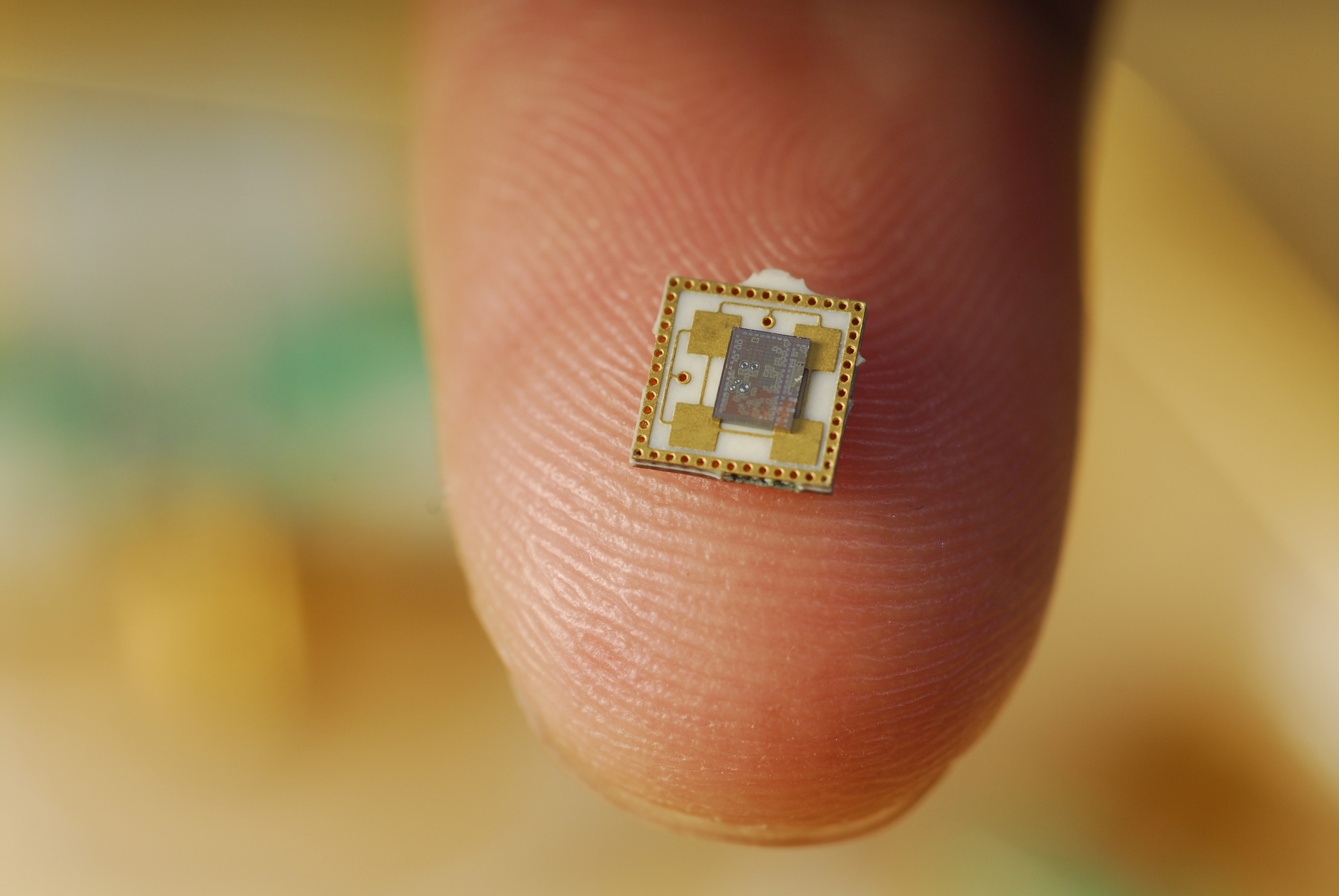
The 7nm chip will not only transform the bitcoin mining sector but really will revolutionize the entire computer industry with a four-fold efficiency. 7nm semiconductors are very small but contain a 20+ billion transistors that will enable many devices to perform more complex computations. There could be a chance a mining company happens to partner with a company like Samsung who is investing billions towards manufacturing 10nm and 7nm chips. In fact, the company has formed an alliance with IBM and Globalfoundries to research and develop these 7nm chips so partnerships are not uncommon.

With Increased Optimization is Centralization an Issue?
Mining pool monopolies, faster chips and topics like the ASIC Boost patent has created a lot of mining centralization debates over the past two years. Miners who were once regarded as protectors of the Bitcoin network has later been considered monopolistic entities. Over the past few months, as the scaling debate intensified, mining optimization has been deemed unfavorable and the drama has escalated to talks of changing Bitcoin’s proof-of-work.
However, this month Ledger Journal published a paper written by Nicola Dimitri that explains that fear involved with mining centralization is misleading. The paper discusses the subject analyzing mining game theory and other topics like whether or not 51% attacks are truly a threat. Dimitri further details that bitcoin mining’s “incentive structure naturally prevents the formation of a monopoly,” and further details that mining is more profitable with fewer pools actively mining.
[Bitcoin] mining activity seems to be intrinsically monopoly-proof, in the sense that if only two miners were to be active, their profits would always be positive regardless of the marginal cost of the opponent. For this reason, none of the two could exclude the other by cutting down his own costs, unless activities other than bitcoin mining would have a higher rate of return.
7nm Chips Close in on Moore’s Law
It will be interesting if GMO manages to produce 7nm chipsets in their mining machines as the semiconductor chips will be significantly smaller, and more efficient than the 16nm versions predominantly used today. The company further states it will be manufacturing the 7nm boards for resale as well, which will bring the next generation mining chips to the general public and competing mining pools.

If the Japanese firm kept the chips a secret, with the industry standard currently set at 16nm, GMO Group’s proprietary chips could basically wipe competition off the map if they don’t have the same technology. Further, the 7nm chip will be getting closer to the possible ceiling of Moore’s Law, which brings extreme production difficulty for 5nm builds and then semiconductors will drop to an even smaller design that will be even harder to procure.
What do you think about 7nm chips coming to the bitcoin mining industry? Let us know in the comments below.
Comments
Post a Comment